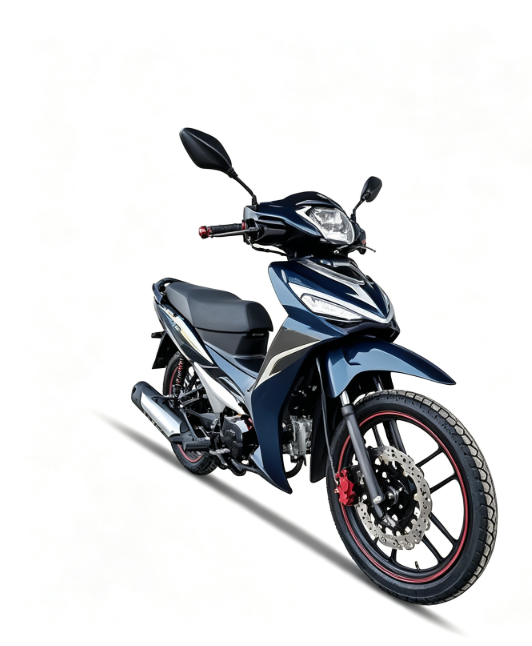
Since 2026, the global motorcycle transportation and outdoor leisure equipment market has undergone structural changes. Both the traditional fuel power and new energy electric tracks have achieved vigorous development. The market demand for four core categories including Motorcycle, Motor Bike, ATV (All-Terrain Vehicle) and Electric Motorcycle has continued to rise. Meanwhile, it has accelerated the upgrading of the industrial chains of Motorcycle Parts and Electric Motorcycle Parts. The industry has formed a brand-new development pattern of "stabilizing stock in traditional markets, expanding increment in emerging tracks, and improving quality in supporting industries".
In the field of traditional transportation, classic Motorcycle and general Motor Bike remain the core mainstays of the global commuting, short-distance travel and long-distance motorcycle touring markets. According to the 2026 H1 industry data released by the China Motorcycle Chamber of Commerce, the number of newly registered motorcycles in China reached 5.11 million. Fuel motorcycles maintained steady growth with a year-on-year increase of 2.6%. With mature power performance, comprehensive after-sales service system and wide scenario adaptability, they continue to deepen market segmentation including mass travel, professional riding and outdoor commuting. In addition, overseas market demand keeps recovering. Emerging markets such as Southeast Asia and Latin America have strong demand for high-performance fuel motor bikes, driving the continuous growth of domestic motorcycle export volume and consolidating the foundation of the industry.
New energy transformation has become the biggest highlight of the industry in 2026, with the Electric Motorcycle market achieving explosive growth and completely reshaping the industry growth curve. Statistics show that in June 2026, the output and sales of electric motorcycles in China surged by 54.33% and 55.63% year-on-year respectively. The cumulative sales volume in the first half of the year exceeded 1.88 million units, with newly registered volume rising by 46% year-on-year, far outpacing the growth rate of traditional fuel models. Compared with fuel motorcycles, electric motorcycles feature low energy consumption, zero emissions, low noise and convenient commuting, perfectly adapting to urban daily travel and short-distance transportation scenarios. Meanwhile, with continuous technological iteration, high-end electric off-road and racing electric motorcycles have emerged, breaking the stereotype that electric vehicles are only suitable for daily commuting and gradually moving towards specialization, high-end positioning and scenario diversification. The overseas market boasts huge blue ocean potential. The sales volume of electric motorcycles in Southeast Asia, Mexico and other regions has skyrocketed by more than 70% year-on-year. Chinese independent brands are accelerating overseas expansion and becoming the core supplier of the global electric motorcycle market.
The upgrading of outdoor leisure consumption has driven the rising popularity of the ATV (All-Terrain Vehicle) track, making it a new growth driver for the industry. With the popularization of outdoor lifestyles such as camping, off-road exploration and venue leisure, ATVs are widely applied in diverse scenarios including outdoor entertainment, venue competitions, agricultural and forestry operations thanks to their superior terrain adaptability, leading to steady expansion of market demand. Industry data indicates that the ATV industry presents an obvious trend of high-end development and electrification in 2026. Despite existing shortcomings of electric ATVs in battery life and low-temperature performance, major vehicle enterprises are increasing investment in R&D. They continuously solve product pain points by optimizing battery layout, upgrading power control systems and enhancing vehicle body stability, promoting the parallel development of fuel and electric ATVs and further expanding the boundary of all-terrain travel markets.
The rapid development of the complete vehicle market has directly driven the upgrading of upstream and downstream supporting industries, ushering in a golden development period for the industrial chains of Motorcycle Parts and Electric Motorcycle Parts. Traditional Motorcycle Parts cover a full range of products including engine components, braking systems, vehicle body shells, suspension devices and tire parts. As fuel motorcycles advance towards high performance, lightweight design and intelligence, the market demand for high-end modified parts and durable original factory parts keeps rising. Meanwhile, the overseas rigid demand gap continues to expand, bringing steady growth in export orders for motorcycle parts. In contrast,Electric Motorcycle Parts adapted to new energy vehicles have become the most popular segment in the industrial chain, with a sharp surge in demand for core components such as battery modules, electric control systems, motor parts, intelligent dashboards and fast charging accessories.
At present, the electric motorcycle parts industry is transforming from low-end OEM manufacturing to high-end independent research and development. Domestic parts enterprises are deeply engaged in technological innovation, iterating products to meet the core needs of electric vehicles in battery life optimization, safety protection and intelligent adaptation, which effectively fills the production capacity gap in overseas markets. Furthermore, the industry has gradually built a complete industrial ecosystem integrating "complete vehicle R&D, parts supporting and terminal services". The upgrading of parts quality in turn improves the overall performance of complete vehicles, promoting the standardized and high-end development of the entire motorcycle industry.
Industry analysts stated that the structural growth momentum of the motorcycle industry will continue throughout 2026. In the future, Motorcycle and Motor Bike will focus on quality upgrading and overseas market exploration to stabilize the foundation of traditional markets; Electric Motorcycle will continuously capture mainstream travel markets relying on policy dividends and technological iteration; ATV will achieve steady market expansion benefiting from the booming outdoor economy. The two supporting tracks of Motorcycle Parts and Electric Motorcycle Parts will become core driving forces for the high-quality development of the industry by virtue of technological innovation and production capacity advantages, promoting the comprehensive transformation of China’s motorcycle industry from "scale export" to "quality and technology export".